
Natural & Wellness Ingredients
Moringa Powder
Moringa leaf powder in food grade and supplement grade.
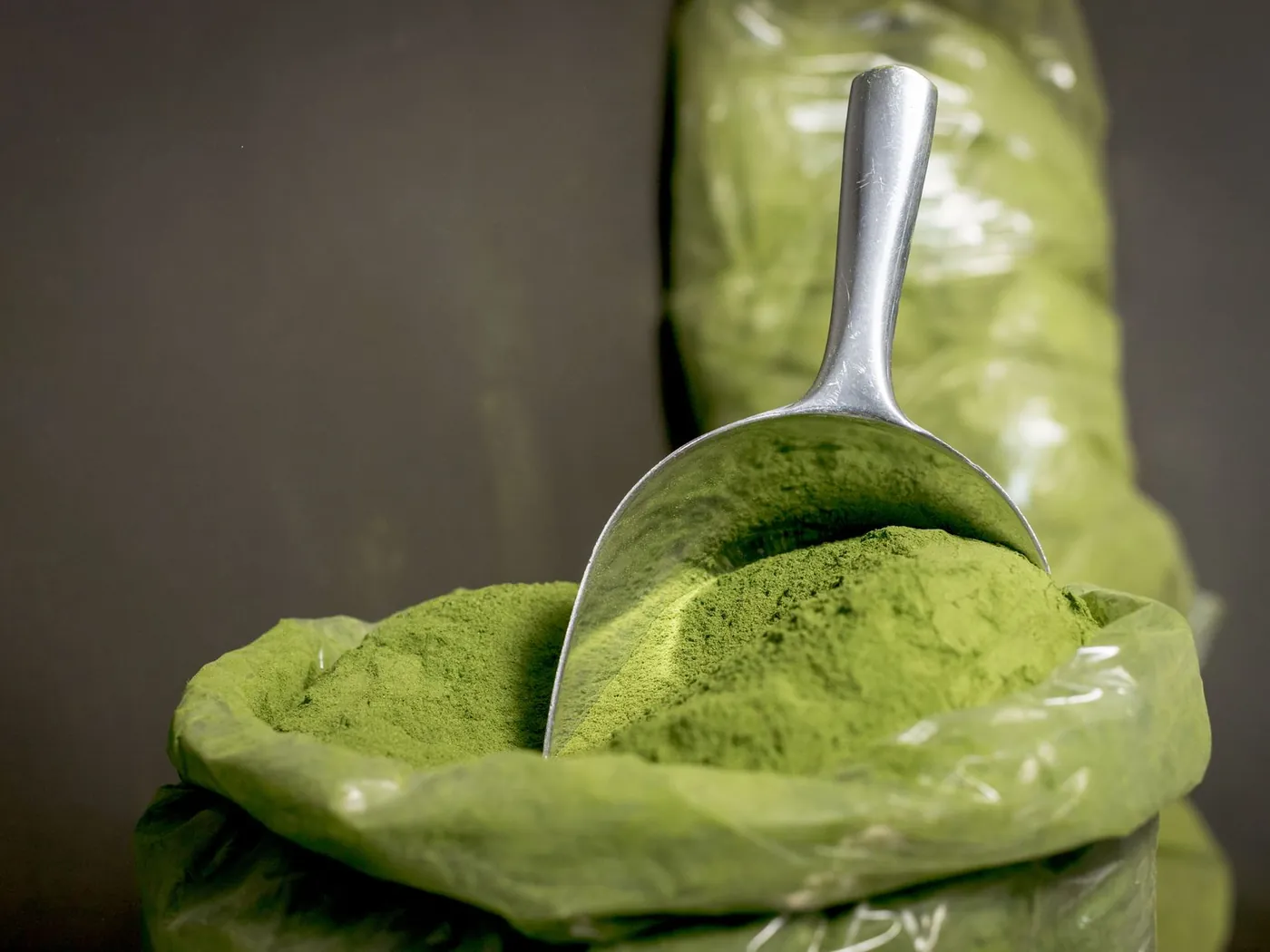
Overview
Moringa leaf powder is made from the dried, milled leaves of Moringa oleifera, the drumstick tree. Buyers specify it by mesh size, moisture, colour and microbiological and contaminant limits, and those limits differ a lot between a culinary buyer and a supplement manufacturer.
DVG supplies two specifications: a food-grade powder for beverage, tea and general food use, and a finer-mesh nutraceutical / supplement grade with tighter testing. India origin.
Forms, grades & specifications
Finer 120+ mesh is used for cosmetic applications and is available on request. Drying below 45°C in shade or by cold mechanical drying preserves colour and active content.
Food Grade (Culinary)
Commodity / culinary moringa leaf powder with coarser mesh, sold to tea and beverage blenders, bulk ingredient traders and general food manufacturers.
| Mesh | 40–80 mesh |
|---|---|
| Moisture (LOD) | ≤ 7% |
| Colour | Bright / light green |
| Yeast & mould | ≤ 10⁵ cfu/g |
| E. coli / S. aureus | Absent / 10 g |
| Salmonella | Absent / 25 g |
| Heavy metals | Pb ≤ 3 ppm, As ≤ 2 ppm, Cd ≤ 1 ppm, Hg ≤ 0.1 ppm |
| Aflatoxins | B1 ≤ 5 ppb, total ≤ 10 ppb |
| Origin | India |
Nutraceutical / Supplement Grade
Finer-mesh powder for supplement and encapsulation use, with tighter microbial limits, a full heavy-metal and pesticide COA on every lot, and batch-to-batch colour and particle-size consistency.
| Mesh | 80–100 mesh (supplement / encapsulation) |
|---|---|
| Moisture (LOD) | ≤ 7% |
| Colour | Bright / light green |
| Total plate count | Buyer-specific, often ≤ 10⁴–10⁵ cfu/g |
| Salmonella | Absent / 25 g |
| Heavy metals | Tested every lot (ICP-MS) |
| Pesticide residues | Multi-residue screen matched to destination |
| Origin | India |
Applications
- Tea, beverage and food manufacturing
- Nutraceutical and supplement formulation
- Bulk ingredient trading
Packaging & commercial
- Standard bulk: 25 kg multiwall kraft paper bags with a food-grade LDPE inner liner, or PP woven sacks with an LDPE / vacuum inner liner.
- Large volume: jumbo bags or fibre drums, 500 kg to 1 MT.
- Palletised and shrink-wrapped, typically 40–48 bags per pallet.
- Shelf life: up to 2–3 years is achievable in airtight, moisture-proof packaging kept cool, dry and out of light; labels are normally set at 18–24 months.
- Moringa powder is bulky, so a container fills by volume well before it reaches its weight limit.
Origin & sourcing
Sourcing regions and supplier details for a specific lot are shared with the quotation. Supplier and facility verification is carried out before sourcing.
Quality & documentation
- Each lot is checked for moisture (LOD), mesh distribution and organoleptic quality: colour, odour and taste.
- Lab testing covers total plate count, yeast and mould, E. coli, Salmonella, S. aureus, coliforms, heavy metals (lead, arsenic, cadmium, mercury), aflatoxin B1 and total, and a multi-residue pesticide screen. For EU-bound lots the pesticide panel should be the broad screen, not a short one.
- Salmonella has been a focus for importers of moringa powder. A COA that is specific to the lot, rather than a generic one, is the right thing to ask for.
Export information
- Registration route
- In India, moringa powder falls under APEDA's Herbal and Medicinal Plants category. It is not a Spices Board scheduled spice.
- Documents
- Commercial invoice, packing list, Certificate of Origin, phytosanitary certificate where the destination requires it for plant material, and a lot-specific COA.
- Samples and MOQ
- Samples can be arranged for approval. Minimum order quantity is agreed per enquiry.
Questions buyers ask
What is the difference between food grade and supplement grade?
Food grade has a coarser mesh and baseline microbial and contaminant limits. Supplement grade has a finer mesh, tighter microbial limits, a full heavy-metal and pesticide COA on every lot, and consistent colour and particle size. They are effectively two products with two buyer conversations.
What mesh size should I ask for?
Culinary and beverage use is usually 40–80 mesh, supplement and encapsulation use 80–100 mesh, and cosmetic use 120+ mesh. The right figure depends on your process, so share your target mesh when you enquire.
How long does moringa powder keep?
In airtight, moisture-proof packaging stored cool, dry and out of light, up to 2–3 years is achievable. Most suppliers label at 18–24 months to protect colour and potency.
Which tests should be on the COA?
Moisture, total plate count, yeast and mould, E. coli, Salmonella, S. aureus, heavy metals, aflatoxins and a pesticide screen matched to your destination, plus organoleptic notes.
Related knowledge
Other products
Ready to talk about Moringa Powder?
Tell us the grade, quantity and destination port. We will confirm what we can supply.