
Agricultural Commodities
Tamarind
Pod, block, concentrate, powder and seed.
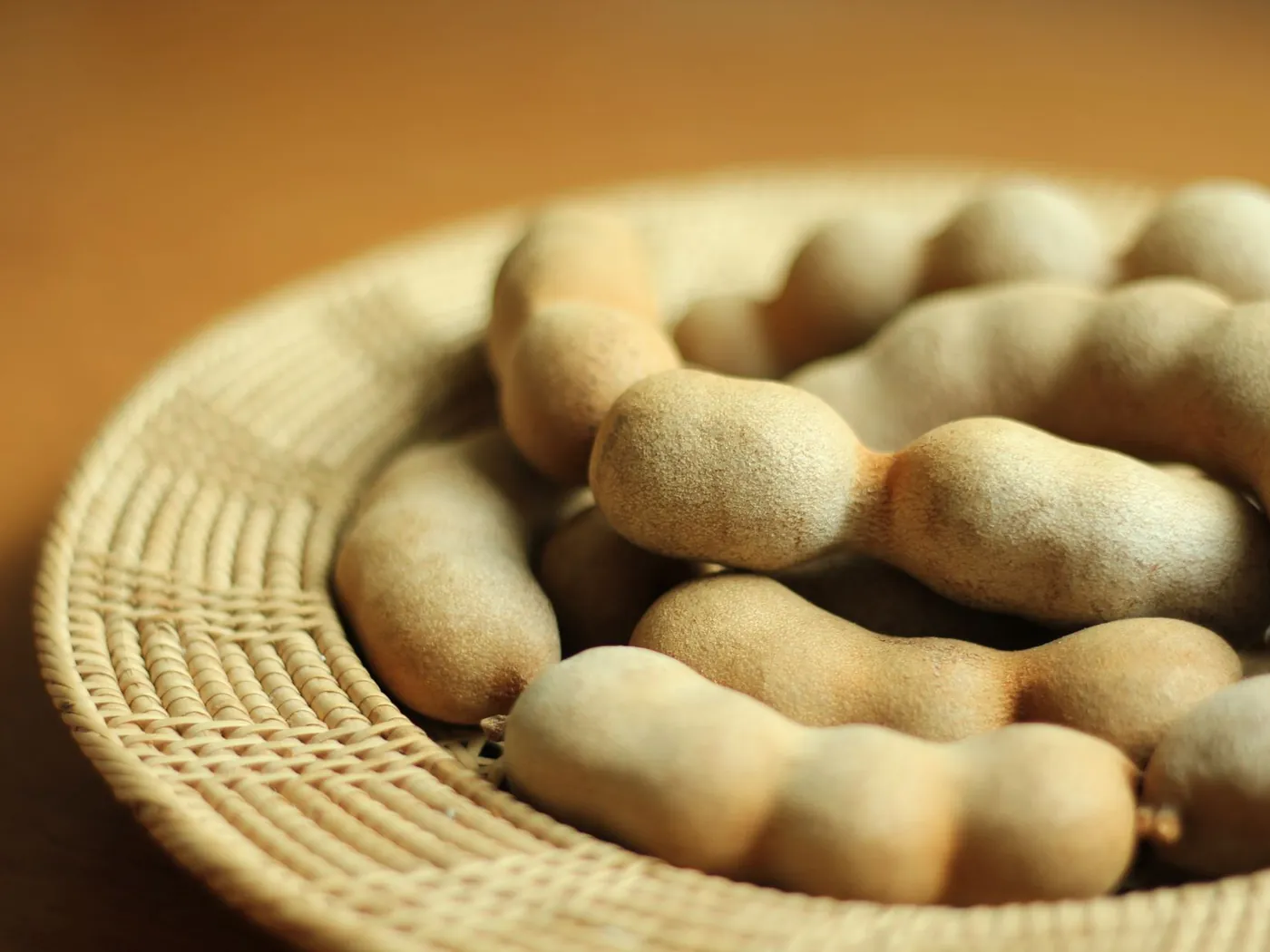
Overview
Tamarind is traded in five materially different forms, and each has its own grading convention, buyer base and price point. Knowing which form you are quoting matters more than any other single detail.
DVG supplies tamarind for bulk export as whole pod, deseeded block, concentrate / paste, powder, and seed / tamarind kernel powder. India origin.
Forms, grades & specifications
Grading conventions for tamarind are trade conventions rather than a single regulator's standard. Numeric specifications are confirmed against the buyer's own spec sheet and an accredited lab.
Whole Pod / Raw Tamarind
Raw tamarind pods, graded mainly by moisture and cleanliness (foreign matter, stones).
| Grading | Moisture and cleanliness |
|---|---|
| Typical buyer | Bulk industrial buyers, further processors |
| Numeric specification | On request |
| Origin | India |
Deseeded / Seedless Block (with fibre)
Pressed tamarind block graded by residual seed content, for spice distributors, HORECA and retail repackers.
| Grading | By residual seed content |
|---|---|
| Premium | ≤ 5% seed (~95% seedless) |
| Standard | ≤ 10% seed |
| Economy | 35–40% seed |
| Retail units | 125 g / 200 g / 500 g / 1 kg |
| Bulk packing | 20 kg cartons (e.g. 4 × 5 kg) or 25 kg loose PP bags |
| Origin | India |
Concentrate / Paste
Deseeded, deveined, fibre-free dark brown concentrate, the primary food-industry form for sauce, condiment, beverage and confectionery manufacturers.
| Brix | 65–80° Brix |
|---|---|
| Colour | Dark brown |
| Depectinised variant | Enzyme-treated, ~65° Brix, higher water-solubility |
| Bulk packing | 25 kg HDPE drums (200 kg drums for very large orders) |
| Origin | India |
Tamarind Powder
Powder milled from tamarind pulp, for seasoning blends and instant-mix manufacturers.
| Form | Milled from pulp |
|---|---|
| Typical buyer | Seasoning blends, instant-mix manufacturers |
| Numeric specification | On request |
| Origin | India |
Seed / Tamarind Kernel Powder (TKP)
A separate industrial by-product line, sold to textile mills, hydrocolloid / gum manufacturers and food-thickener buyers.
| Technical grade | Textile sizing |
|---|---|
| Refined grade | Food-grade thickener E413 |
| Typical buyer | Textile mills, gum manufacturers, food-thickener buyers |
| Origin | India |
Applications
- Sauce, condiment, beverage and confectionery manufacturing
- Seasoning blends and instant mixes
- Spice distribution, HORECA and retail repacking
Packaging & commercial
- Sealed, moisture-barrier packaging is used to prevent mould and rehydration in humid transit.
- Block: retail units of 125 g to 1 kg, bulk in 20 kg cartons (e.g. 4 × 5 kg) or 25 kg loose PP bags. Concentrate: 25 kg HDPE drums, with 200 kg drums for very large orders.
- Tamarind is dense rather than bulky, so containers are usually limited by weight rather than volume.
Origin & sourcing
Karnataka, Tamil Nadu and Kerala are commonly cited as India's leading tamarind-producing states, followed by Andhra Pradesh and Telangana. The origin of a specific lot is confirmed with the quotation.
Quality & documentation
- Each lot is checked for moisture, Brix (concentrate / paste), seed and fibre content (block and concentrate), ash and acid-insoluble ash, tartaric / citric acid and pH, colour, foreign matter and, where used, residual SO2.
- Lab testing covers total plate count, yeast and mould, E. coli, Salmonella, S. aureus, heavy metals (lead, arsenic, cadmium, mercury) and a pesticide multi-residue screen.
- A Certificate of Analysis (COA) is available on request for each shipment.
Export information
- HS codes
- Fresh tamarind 0810.90.20, dried tamarind 0813.40.10, tamarind powder / flour 1106.30.10. Paste and concentrate have no dedicated HS line and are declared under different headings by different exporters, so the code should be agreed with your customs broker from the first shipment.
- Documents
- Commercial invoice, packing list, Certificate of Origin, phytosanitary certificate, and a lot-specific COA.
- Samples and MOQ
- Samples can be arranged for approval. Minimum order quantity and packing are agreed per enquiry.
Questions buyers ask
What are the main forms of tamarind?
Whole pod, deseeded (seedless) block with fibre, concentrate or paste, powder, and seed or tamarind kernel powder. Each has its own grading convention and buyer base.
How is tamarind block graded?
By residual seed content: about 5% seed or less is premium (roughly 95% seedless), up to 10% seed is standard, and 35–40% seed is economy grade.
What does Brix mean for concentrate?
Brix measures the soluble solids in the concentrate. Standard tamarind concentrate is traded at 65–80° Brix, and a depectinised (enzyme-treated) variant at about 65° Brix is more water-soluble.
How is tamarind packed for export?
Block goes in 20 kg cartons or 25 kg PP bags, concentrate in 25 kg HDPE drums. Because tamarind is dense, containers are normally weight-limited.
Related knowledge
Other products
Ready to talk about Tamarind?
Tell us the grade, quantity and destination port. We will confirm what we can supply.