
Indian Products
Makhana grades explained: the Suta scale
The Suta scale grades popped makhana by kernel size. Learn what 4, 5, 6 and 7 Suta mean, how phool differs from lava, and what to put in a specification.
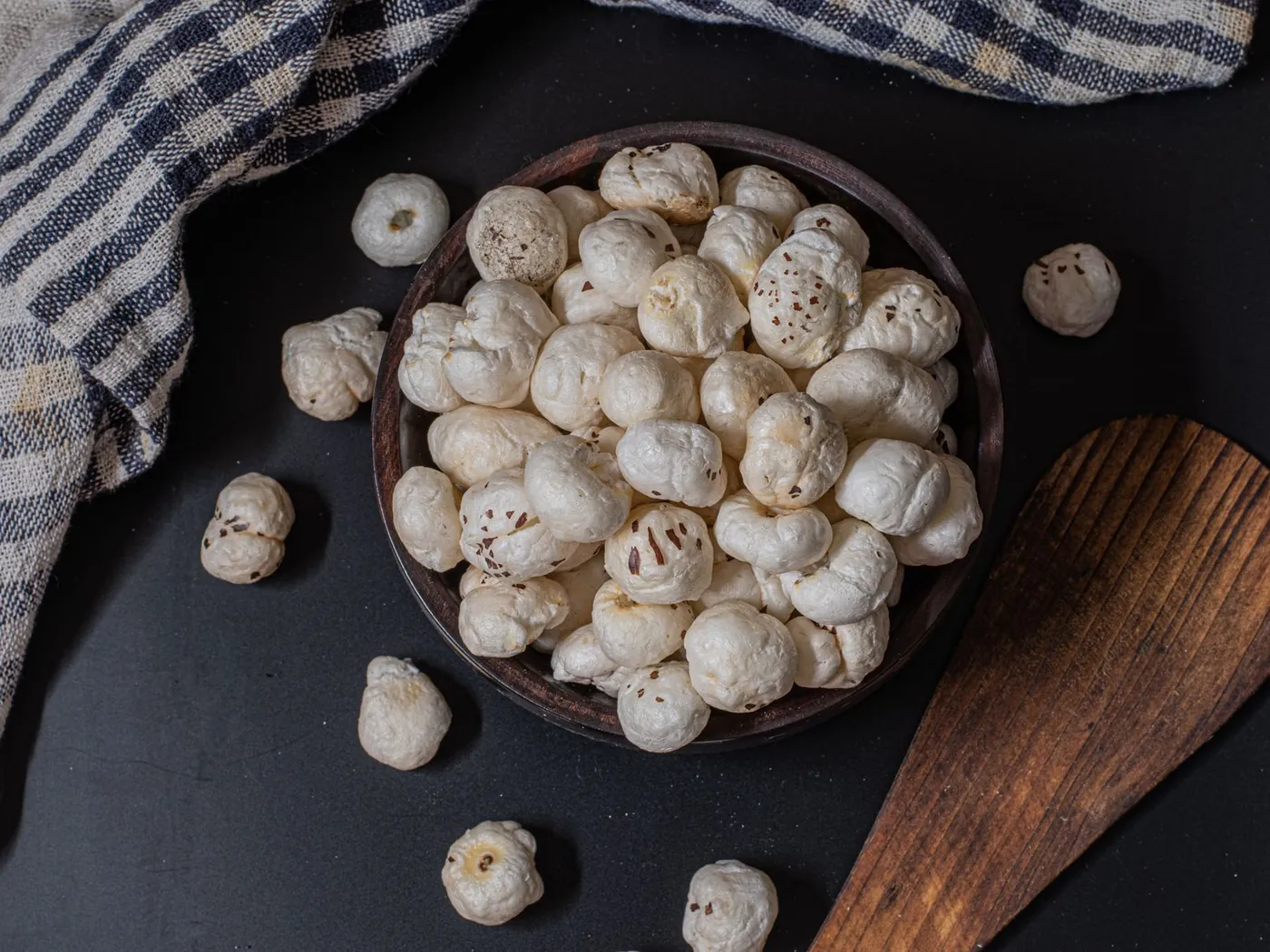
If you are buying makhana, the first word you will meet is Suta. It is the traditional unit used to grade popped kernels by size, and it is the single most important line in a makhana specification.
What a Suta is
One Suta is roughly 3.175 mm, which is one eighth of an inch, so one inch equals eight Suta. A higher Suta number means a larger, more fully popped kernel, and larger kernels are more valuable.
The grades
| Grade | Approx. size | Common trade name | Typical use |
|---|---|---|---|
| 7 Suta and above | More than 21 mm | Super Jumbo / Extra-Large | Premium snacking, gifting, top export tier |
| 6 Suta | 18 to 21 mm | Jumbo / Export grade, "Phool" | Premium retail snacking, main export grade |
| 5 Suta | 15 to 18 mm | Good / Standard retail | Mainstream branded retail, mid-tier export |
| 4 Suta | 12 to 15 mm | Economical / Regular | Value retail, bulk, base export |
| 2 to 3 Suta ("lava" or "thurri") | Under 12 mm, often incompletely popped | Broken / processing grade | Flour, namkeen mixes, sweets, kheer |
Phool versus lava
Size is not the only axis. Phool makhana is fully popped, round, bright white and uniform, and is the premium snacking and export material. Lava makhana is smaller, irregular and often incompletely popped, with traces of dark seed coat. It is ground into flour or used in sweets and gravies rather than sold as whole kernels. Terminology is not used consistently across the trade, which is another reason to describe what you want rather than rely on a single label.
What to write in your specification
- The Suta grade, or "processing grade" for flour.
- A maximum for moisture, because moisture control prevents mould and rancidity.
- A maximum for broken or immature kernels.
- A colour requirement, for example bright white with minimal seed-coat residue.
- Packing, for example bulk bags with a food-grade liner, or retail pouches.
The lower grades are not a quality problem to avoid. They are the right raw material for flour, namkeen and sweets, and using them well makes the whole harvest useful.
Read the overview in What is makhana?, or see every grade on the Makhana dossier.
Keep reading
- 01
Indian Products
What is makhana (fox nuts)?
Makhana, or fox nuts, are the popped seeds of a water lily. Here is what they are, where they come from, how they are traded and what importers should specify.
- 02
Buying from India
What to include in an import enquiry
A checklist for writing an enquiry that gets a useful answer from an Indian exporter: product, specification, quantity, packing, port, Incoterm and documents.
- 03
Quality & Sourcing
Moisture, purity and mesh explained
Three numbers that appear in almost every agricultural specification. What moisture, purity and mesh actually measure, and how to specify them clearly.
Questions about sourcing from India?
We read every enquiry. Tell us what you are looking for.