
Indian Products
What is makhana (fox nuts)?
Makhana, or fox nuts, are the popped seeds of a water lily. Here is what they are, where they come from, how they are traded and what importers should specify.
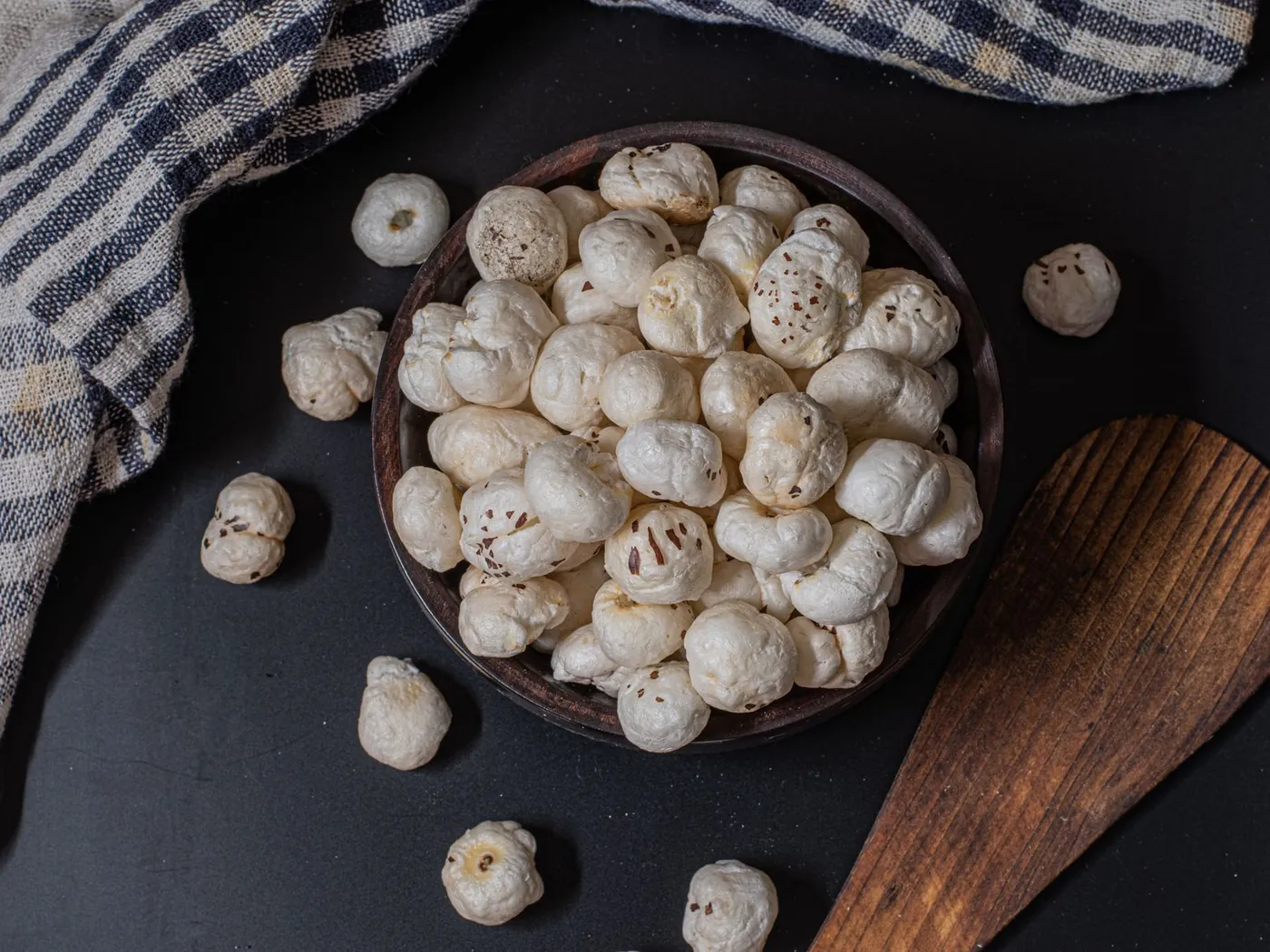
Makhana is the popped seed of Euryale ferox, a prickly water lily that grows in ponds and wetlands. In international trade it is sold as makhana, fox nuts or phool makhana ("phool" means flower, a reference to the white, fully popped kernel).
From pond to kernel
The hard, dark seeds are harvested from the water, dried, graded, then roasted and cracked so that the white kernel pops. The result is a light, round, bright-white kernel with a mild taste. Because popping is partly a manual craft, the quality of a lot depends on how fully the kernels have popped and how carefully they are graded.
Where it comes from
Makhana is traditionally grown and processed in Bihar, and the Mithila region in particular is its heartland. "Mithila Makhana" has held a Geographical Indication (GI) tag since 2022. A GI claim applies only to product that is sourced and documented from the GI region, so if origin matters to you, ask for the origin documents for the specific lot.
What buyers specify
Makhana is sold by size grade rather than by weight class. The trade uses the Suta scale, and the grade drives both the end use and the price. Our guide to makhana grades explains the scale in detail. In an enquiry you will normally state:
- the Suta grade (or "processing grade" if you want to grind it)
- maximum moisture and maximum broken or immature percentage
- colour or whiteness requirement
- packing: bulk bag size, or retail format
Forms in the trade
| Form | What it is | Typical use |
|---|---|---|
| Popped kernels, 4 to 7 Suta and above | Whole kernels, graded by size | Snacking, retail packs, gifting |
| Processing grade (2 to 3 Suta, "lava" or "thurri") | Small, often incompletely popped kernels | Flour, namkeen mixes, sweets, kheer |
| Makhana powder | Milled kernels | Flour, sweets, processing |
Classification and packing
India introduced dedicated HS codes for makhana in July 2025: 2008.19.21 for popped makhana, 2008.19.22 for flour or powder, and 2008.19.29 for other makhana products. See HS codes explained for how to use them. Bulk lots are normally packed in PP or HDPE woven bags with a food-grade inner liner, typically 5 to 15 kg, because plain jute does not protect against moisture.
DVG supplies popped makhana and makhana powder from India. The full specifications are on the Makhana product dossier.
Keep reading
- 01
Indian Products
Makhana grades explained: the Suta scale
The Suta scale grades popped makhana by kernel size. Learn what 4, 5, 6 and 7 Suta mean, how phool differs from lava, and what to put in a specification.
- 02
Export Knowledge
HS codes explained for importers of Indian products
What Harmonized System codes are, why the same product can carry different codes, and how to use the codes for makhana, psyllium, tamarind, coffee and pellets safely.
- 03
Quality & Sourcing
Moisture, purity and mesh explained
Three numbers that appear in almost every agricultural specification. What moisture, purity and mesh actually measure, and how to specify them clearly.
Questions about sourcing from India?
We read every enquiry. Tell us what you are looking for.